IMMA opens landmark exhibition on peacebuilding through art in post-conflict Europe
11/09/2026IMMA opens landmark exhibition on peacebuilding through art in post-conflict Europe
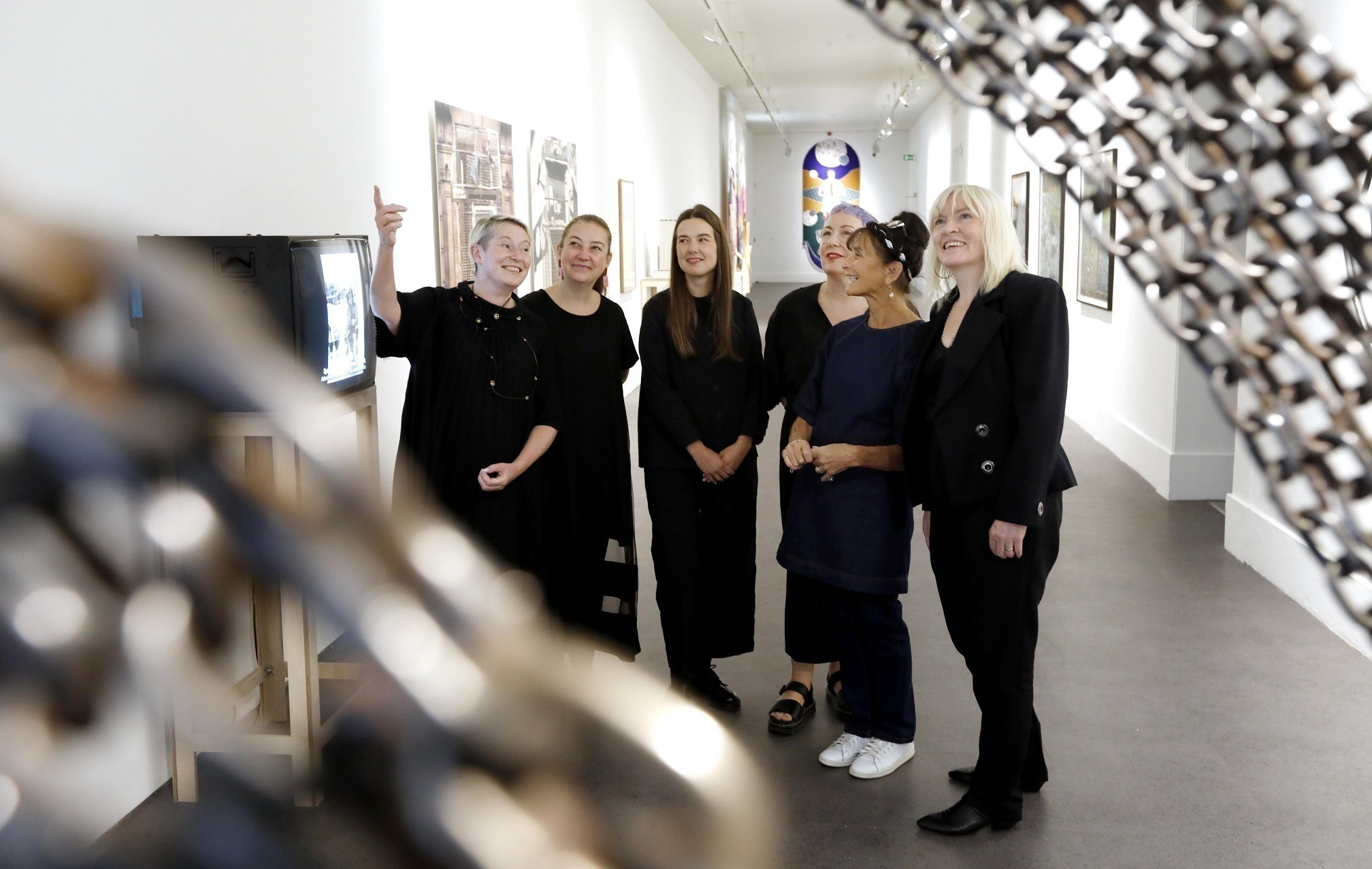
Landmark exhibition features 59 artists from 17 countries across Europe.
The exhibition draws parallels between the conflict in Northern Ireland and subsequent peace process, with those of our European counterparts that have had similar trajectories in transitioning from states of conflict into democratic states of peace and stability.
More than 100 works on display, including almost 60 international works that have never been shown in Ireland before, pieces from IMMA’s Collection on public display for the first time, and work that has been specifically commissioned for the exhibition.
Dublin, 11 September 2026 – A landmark exhibition called Technologies of Peace: Art & Transition in Contemporary Europe (1989 – 2026) will be launched at the Irish Museum of Modern Art (IMMA) in Dublin this evening.
A flagship exhibition in the EU Presidency’s cultural programme, Technologies of Peace draws on the artistic, political, and social perspectives of 59 artists from 17 countries across Europe.
Spanning video, photography, installation, sculpture and archival material, the works illustrate how European communities, including post-dictatorship countries, have moved from conflict to fragile peace in the wake of war and upheaval.
Amongst them are almost 60 international works that have never been shown in Ireland before, as well as pieces from IMMA’s Collection that are on public display for the first time, and work that has been specifically commissioned for the exhibition.
The exhibition takes the form of five chapters – Technologies of Peace, Language & Translation, Trauma & Reverberation, Ecology & Architecture, and Imagining Futures. Each chapter highlights the shared histories and interconnected futures that bind European societies together, while recognising the different paths through which they have navigated division, memory and change.
In particular, the exhibition seeks to draw parallels between Ireland’s complex political history, particularly the conflict in Northern Ireland and subsequent peace process, with those of our European counterparts that have had similar trajectories in transitioning from states of conflict into democratic states of peace and stability.
In its understanding of peace as something built and renewed through practical acts of connection across communities and traditions, as well as more complex legalities and ongoing negotiations, the exhibition considers peace not as a fixed condition, but as an active process of creation, maintenance, care, compromise and collective imagination.
Technologies of Peace features works by several renowned Irish artists, some of whose works are part of IMMA’s National Collection and will be shown at IMMA as part of this exhibition for the first time. They include the Derry-born artist Willie Doherty, Donegal-born artist Frances Hegarty and Belfast-born Cathy Wilkes and Rita Duffy.
Willie Doherty is renowned for his ongoing research into the relation between trauma and memory in post-conflict Northern Ireland. ENDLESS, Doherty’s film on display as part of the exhibition, reflects on the nature of mistrust and deception in a divided community, locating these concerns against a backdrop of post-truth politics and the corruption of democracy.
International artists include Marina Abramović, Petrit Halilaj, Goshka Macuga, Małgorzata Mirga-Tas, Claudia Pagès Rabal, Christodoulos Panayiotou, Indrė Šerpytytė and Slavs and Tatars, many of whose works will be seen by Irish audiences for the first time.
Marina Abramović, the much-celebrated Serbian performance artist, is showing one of her works from 2001 called The Hero. The film is dedicated to her father, who was a soldier in World War II, and will be available to watch on IMMA’s digital outdoor screen Living Canvas at IMMA, the largest digital art screen in Europe.
Dragana Jurišić, an artist born in the former Yugoslavia, and now living and working in Dublin, also features in the exhibition. In 1991, during the early months of the Yugoslav Wars, Jurišić’s family home was destroyed, and thousands of her father’s photographic prints and negatives were lost in the fire. Her practice attempts to understand what happened in her lost country, how to rationalise her identity and how to envisage post-conflict restoration through her work.
Also included are works by Ursula Burke, Amanda Dunsmore, and Glenn Loughran – participants in IMMA’s Dwell Here Residency Programme. Both Dunsmore and Loughran’s works have been especially commissioned for this exhibition.
Minister for Culture, Communications and Sport Patrick O’Donovan TD, said: “Technologies of Peace is a timely exhibition that brings together artists from across Europe whose work emerges from histories of conflict and transition. At a moment marked by ongoing wars and geopolitical instability, it reminds us that peace is never straightforward. It is a complex and ongoing process – one that needs to be nurtured and sustained.
“With 59 artists from 17 countries, and more than 100 artworks, IMMA is to be commended for the scale and depth of its approach to this topic. With free admission, I hope many people get to enjoy it as part of Ireland’s cultural programme for the EU Presidency. I want to wish IMMA and its team all the best with tonight’s opening and with the ongoing exhibition.”
Annie Fletcher, Director of IMMA, said: “IMMA is proud to present this landmark exhibition on peacebuilding, reconciliation and social transition in Europe as part of the cultural programme of Ireland’s Presidency of the Council of the European Union. At a time when Europe is confronting profound political, social and cultural challenges, Technologies of Peace explores one of the defining questions of our time: how peace is imagined and sustained in societies shaped by conflict and political transformation.
In particular, by looking at all the ways in which peace is created through small, practical acts, as well as the larger, more newsworthy negotiations, it invites us to consider peace not as a fixed achievement, but as a continuous practice that must be nurtured, negotiated and renewed.
“In this exhibition, ‘technologies’ of peace are the levers and tools through which societies regenerate and navigate a path out of conflict. But they also include cultural forms of exhibition making itself – how cultural expression, publishing, language and artistic experimentation can act as powerful tools for civic repair – reaffirming Europe’s potential for critical reflection, solidarity, and transformation through the arts,” she said.
Technologies of Peace: Art & Transition in Contemporary Europe (1989 – 2026) is the first public presentation of a major five-year research initiative led by IMMA, exploring Technologies of Peace through exhibitions, artist residencies, symposia, co-commissions, research, and publications between 2025 and 2030. The initiative examines the central role artistic practice and cultural experience play in healing societies, fostering reconciliation, and building a shared sense of identity and community.
It will be accompanied by a new publication, launching to coincide with an international Technologies of Peace symposium taking place 3 – 4 December 2026.
An expanded research exhibition will follow in 2028 examining peace in a global context.
Technologies of Peace: Art & Transition in Contemporary Europe (1989 – 2026) opens to the public on September 12th and runs until May 2027. Admission is free.
Ends
Notes for Editors
A photocall/ media opportunity will take place at IMMA today. To RSVP or to request interviews or images please contact:
Q4 Public Relations Amy Nora Fitzgibbon | [email protected] | 086-255-2035
Or
IMMA
- Patrice Molloy | [email protected] | 086 200-9957
- Monica Cullinane | [email protected] | 086 201-0023
Photography
Images will be released by Mark Stedman: 086 367 9394 [email protected]
About IMMA
IMMA is Ireland’s National Cultural Institution for Modern and Contemporary Art. Its mission is to connect audiences and art, providing an extraordinary space in Ireland where contemporary life and contemporary art connect, challenge and inspire one another. Its diverse and ambitious programme comprises of exhibitions, commissions and projects by leading Irish and international artists, as well as a rich Engagement and Learning programme which together provides audiences of all ages the opportunity to connect with contemporary art and unlock their creativity.
Situated in Dublin landmark, the 17th century Royal Hospital Kilmainham, IMMA is home to the National Collection of Modern and Contemporary Art, started in 1991 and now numbering over 4,000 artworks by Irish and international artists. IMMA makes this national resource available through exhibitions at the museum, and other venues nationally and internationally, engagement and learning programmes and digital resources. imma.ie